
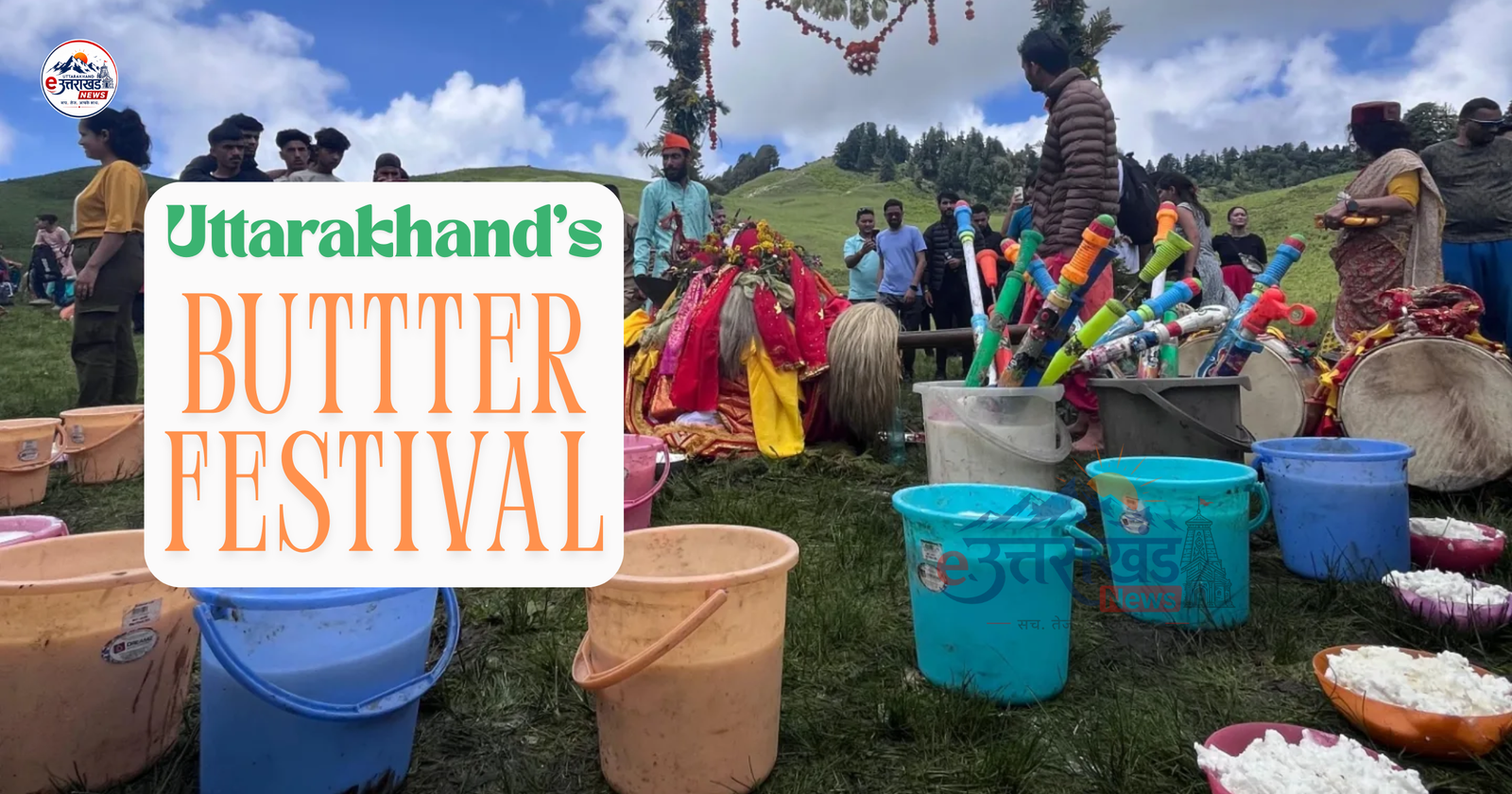
Every August, in a small village called Raithal in Uttarkashi, something unusual happens. Villagers climb up to a meadow called Dayara Bugyal and celebrate Holi, but not with colors. They use butter and buttermilk instead.
This is Uttarakhand’s Butter Festival, also known as Anduri Utsav. It’s one of the state’s most unique celebrations, rooted in gratitude, tradition, and a deep connection between the villagers and their land.
In this article, we’ll cover what the festival is, why it’s celebrated, how it’s celebrated, and everything you need to know if you want to experience it yourself.
What Is Uttarakhand’s Butter Festival?
The Butter Festival is exactly what it sounds like: a version of Holi where people throw butter and buttermilk instead of colored powder. It takes place in Dayara Bugyal, a high-altitude meadow above the village of Raithal in Uttarkashi district, sitting at roughly 10,000 to 12,000 feet.
Locally, it’s called Anduri Utsav (or Andhuri Utsav). The festival usually falls between August 16 and 18 each year, timed with Bhado Sankranti. In 2026, it’s set for August 18.
Villagers walk up to the meadow along with their cattle, which have spent the spring and monsoon grazing on Dayara’s grasslands. The trip up is part celebration, part thank-you. Around 500 people typically make the climb, and once they reach the top, the butter starts flying. Faces get smeared, buttermilk gets splashed, and the whole meadow turns into one big, joyful mess.
What started as a small, local tradition has slowly turned into a reason for trekkers to visit. Dayara Bugyal was already known as a trekking spot, but the festival has given it an extra pull for travelers who want to time their trip around something more than just the views.
The Story Behind the Butter Festival
Every year, once the snow melts, the villagers of Raithal move their cattle up to Dayara Bugyal. The meadow is rich with grass and medicinal plants, exactly what livestock need to grow strong and produce good milk.
The cattle spend the whole summer up there, grazing freely across the slopes. Come August, it’s time to bring them back down. The Butter Festival marks that homecoming.
The Legend of Jeetu Bagadwal
Locals believe the meadows are still watched over by Jeetu Bagadwal, a guardian deity tied deeply to Dayara Bugyal. Villagers see him as a protector who keeps their cattle safe through the grazing season.
He’s not the only one they honor. Lord Somkareshwar, a form of Shiva, is worshipped across the region. Goddess Bhagvati is prayed to for her nurturing nature. Even the rivers, forests, and mountains are treated as living protectors in local belief. It’s less about one single deity and more about a whole web of guardianship the villagers feel grateful for.
Marking the Herders’ Return to the Village
By the time Bhadrapad arrives, the herders make their way back to Raithal with their cattle. This isn’t just a logistical trip. It’s the moment the whole village has been waiting for.
The Butter Festival is how they mark it. It’s a thank-you to nature for keeping their animals healthy all season, and a celebration of the bond between the villagers, their land, and their livestock.
Deities of Raithal and Dayara Bugyal
Raithal’s connection to Dayara Bugyal isn’t just practical. It’s deeply spiritual. The villagers don’t see the meadow as just grazing land. They see it as a space watched over by multiple deities, spirits, and guardians, each playing a role in keeping the land, the cattle, and the community safe.
This is part of why the Butter Festival feels bigger than a simple celebration. It’s layered with generations of belief, where nature itself is treated as sacred and every good harvest or healthy herd is seen as a blessing worth thanking someone for.
Here’s a look at the key figures the villagers honor.
1. Lord Someshwar
Also known as Somkareshwar, Lord Someshwar is worshipped as a form of Lord Shiva. His reverence isn’t limited to Raithal alone. Villages across the wider Uttarkashi region hold him in high regard, and he’s often seen as one of the central spiritual figures tied to this landscape.
2. Goddess Bhagvati
Goddess Bhagvati, linked to Parvati, is worshipped for her protective and nurturing qualities. Villagers turn to her as a maternal figure watching over the community, the land, and the cattle that graze on it.
3. Nature Spirits (Fairies)
The people of Raithal don’t just worship named gods. Rivers, forests, and mountains are treated as living protectors in their own right. These nature spirits, sometimes referred to as Achari, reflect a belief system where the land itself is sacred, not just a backdrop for worship.
4. Guardian Deities
Chief among the guardian spirits is Jeetu Bagadwal, believed to still watch over Raithal and the Dayara meadows. Locals credit him with keeping their cattle safe through the grazing season, which is part of why the Butter Festival carries so much emotional weight.
5. Agricultural Deities
Since the festival is rooted in a farming and pastoral lifestyle, deities connected to agriculture and fertility hold an important place too. They’re worshipped for healthy crops, fertile land, and a good harvest, all things directly tied to the villagers’ livelihood.
6. Local Village Deities (Bhairav Devta, Narsingh Devta, Kshetrapal Devta)
Beyond the major figures, Raithal honors a set of local deities: Bhairav Devta, Narsingh Devta, and Kshetrapal Devta. Each is believed to protect the community in different ways, from guarding the village boundaries to warding off harm. Together, they form part of the everyday spiritual fabric of life in Raithal.
How Do They Celebrate the Butter Festival?
The Butter Festival isn’t a one-moment event. It unfolds in stages, starting with a climb and ending in a full-blown celebration that involves the whole village. Each part of the day carries its own meaning, but together, they create the kind of atmosphere you won’t find anywhere else in India.
Here’s how the day typically plays out.
The Uphill Procession to Dayara Bugyal
The celebration begins with around 500 villagers making the climb up to the meadow. It’s not just a walk. It’s a shared journey that sets the tone for the whole day, with families, neighbors, and friends heading up together.
Playing Holi With Butter and Buttermilk
Once everyone reaches the meadow, the real fun begins. Instead of colored powder, villagers smear each other’s faces with butter and splash buttermilk around like it’s water. Within minutes, the whole meadow turns into a joyful, messy blur of laughter and butter-streaked faces.
Dhol-Damau Music and Traditional Dance
No celebration in the hills is complete without music. The beats of the Dhol and Damau, traditional Pahari instruments, fill the meadow as people dance along. Folk dances like Jhora, Barada Nati, Thali Nritya, Chholiya, Langvir Nritya, Rasu Nritya, and Pandava Nritya bring an extra layer of color and rhythm to the day.
Krishna-Radha Theatrical Performances
Children take center stage during the festival, dressing up in full costume and makeup to perform skits depicting the life of Lord Krishna. These performances add a devotional, storytelling element to the celebration, blending faith with entertainment.
The Community Feast
After the singing, dancing, and butter-smeared chaos, the day winds down with a shared meal. It’s a moment for the whole village to sit together, eat, and enjoy the results of a season’s hard work, closing the festival on a note of togetherness.
The Importance of the Butter Festival
The Butter Festival isn’t just a fun, messy celebration. At its heart, it’s an act of gratitude. Every element of the day, from the climb to the butter to the music, ties back to one simple idea: thanking the land and the forces that protect it.
1. Gratitude to Bugyal Devi, the Goddess of the Meadow
The villagers see Dayara Bugyal as more than just grazing land. It’s a space watched over by Bugyal Devi, the goddess of the meadow, who they credit for keeping the pastures fertile and their cattle healthy through the season. The butter itself becomes a symbolic offering, a way of saying thank you for a good grazing season and a safe return home.
2. A Festival of Gratitude Over Grandeur
Unlike big commercial festivals with stages, sponsors, and elaborate setups, the Butter Festival stays rooted in something much simpler. There are no fireworks or grand productions here. Just a community coming together, expressing thanks through music, dance, and butter-smeared laughter.
That’s part of what makes it so special. It’s raw and unscripted, shaped entirely by the people who’ve been celebrating it for generations, not for an audience, but for themselves and the land that sustains them.
Butter Festival vs Ghee Sankranti — Don’t Confuse the Two
If you’ve been researching Uttarakhand’s festivals, you may have come across both the Butter Festival and Ghee Sankranti and wondered if they’re the same thing. They’re not, even though both revolve around dairy and gratitude.
| Aspect | Butter Festival (Anduri Utsav) | Ghee Sankranti (Olgia) |
|---|---|---|
| Location | Hyper-local to Raithal village and Dayara Bugyal meadow, Uttarkashi | Celebrated across Uttarakhand, in homes statewide |
| Timing | Bhado Sankranti, mid-August (around Aug 16–18) | First day of Bhado (August) |
| Main Activity | Playing Holi with butter and buttermilk on a Himalayan meadow | Preparing and eating ghee-based dishes like bedu roti at home |
| Core Theme | Marks the cattle’s return from high-altitude grazing | Gratitude for agricultural prosperity and the harvest season |
| Setting | Outdoor, high-altitude meadow (~12,000 feet) | Indoor, home and village-based |
| Key Tradition | Butter and buttermilk smeared on faces, folk dance, Krishna-Radha skits | Gift-giving (Olag) between families, landowners, and artisans |
| Vibe | Playful, active, Holi-like celebration | Quiet, food-focused, family gathering |
The bottom line: Ghee Sankranti is a statewide harvest festival centered around food and gifts, while the Butter Festival is a one-of-a-kind, hyper-local celebration built around cattle, community, and a Himalayan meadow.
How to Reach Dayara Bugyal / Raithal
Getting to the Butter Festival takes a bit of planning since Dayara Bugyal sits deep in the Himalayas. But the journey itself, winding through hill roads and forested trails, is part of the experience.
By Air: The nearest airport is Jolly Grant Airport in Dehradun, roughly 225 km from Raithal. From there, you’ll need to travel by road.
By Train: Dehradun Railway Station is the closest major rail link, about 91 km from Raithal.
By Road: From Dehradun, the route passes through Mussoorie, with a worthwhile stop at Tingling viewpoint along the way. Uttarkashi, the nearest city, is roughly 38 km from Raithal and makes for a convenient overnight stop if needed.
From Raithal to Dayara Bugyal: Raithal itself is the starting point for the trek. From here, it’s a multi-day hike through oak forests and open meadows before you reach Dayara Bugyal.
| Access Point | Distance from Raithal/Dayara |
|---|---|
| Jolly Grant Airport | ~225 km |
| Dehradun Railway Station | ~91 km |
| Uttarkashi (nearest city) | ~38 km |
Where to Stay Near Raithal (Uttarkashi)
Raithal serves as the base camp for both the trek and the festival, so most travelers start and end their journey here.
In Raithal: The village has basic homestays and guesthouses, simple but comfortable enough to rest up before the climb. Staying with a local family is also a great way to get a feel for the culture before the festival itself.
Along the Trail: Since the trek to Dayara Bugyal takes a few days, most of it involves camping. Popular campsites along the route include Gui, Chilapada, and Nayata, each offering a different view of the surrounding Himalayan peaks.
A Quick Tip: If you’re visiting during the festival, book your stay in Raithal well in advance. The village is small, and rooms fill up fast as more trekkers and travelers discover the event
How to Participate as a Traveler
The Butter Festival isn’t staged for tourists. It’s a genuine local tradition, so a bit of preparation and respect goes a long way if you want to be part of it.
Time Your Trip Right: Plan your visit around mid-August to align with the festival dates and the Dayara Bugyal trek.
Base Yourself in Raithal: This is your starting point for both the trek and the festival, so it makes sense to stay here before heading up to the meadow.
Join Respectfully: Remember, this is a community celebration, not a show put on for visitors. Follow the villagers’ lead, ask before joining in, and be mindful of local customs.
Dress for the Mess: Wear old clothes you won’t mind staining. Between the butter and the buttermilk, there’s a good chance you’ll leave the meadow looking like everyone else, covered head to toe.
Bring a Camera, But Ask First: The festival makes for incredible photos, but always ask before photographing people, especially during rituals or performances.
What to Expect
Beyond the butter-throwing itself, the trek and festival together offer a full Himalayan experience.
Sweeping Mountain Views: From Dayara Bugyal, you’ll get views of some of the biggest names in the Garhwal Himalayas, Bandarpunch, Srikanth, Jaunli, Draupadi ka Danda, and glimpses of the Gangotri range.
A Beginner-Friendly Trek: The route to Dayara Bugyal passes through oak forests and open meadows, and it’s considered moderate and accessible even for first-time trekkers.
A Festival Atmosphere Like No Other: Expect music, dance, butter-smeared faces, and an energy that’s hard to describe until you’re standing in the middle of it.
Genuine Local Hospitality: The villagers of Raithal are proud of their traditions, and that pride shows in how warmly they welcome visitors who show up with respect and curiosity.
Why Witness It Once in a Lifetime
There’s no festival quite like this anywhere else. A Holi played not with color, but with butter, on a Himalayan meadow, by a community giving thanks to the land that sustains them. It’s raw, unscripted, and rooted in gratitude rather than spectacle.
If you’re looking for a trek that gives you more than mountain views, one that hands you a story, a memory, and maybe a butter-smeared photo you’ll treasure forever, the Butter Festival at Dayara Bugyal deserves a spot on your list.
Frequently Asked Questions
Where is the Butter Festival celebrated?
The Butter Festival is celebrated at Dayara Bugyal, near Raithal village in Uttarkashi district of Uttarakhand, at an altitude of roughly 12,000 feet.
When is the Butter Festival celebrated in Dayara Bugyal?
The Butter Festival, or Anduri Utsav, is celebrated during Bhado Sankranti in August. In 2026, it’s expected around August 16 to 18.
Is the Dayara Bugyal Trek open in August?
Yes, the trek is generally accessible in August, when the meadows are green and the festival takes place. It’s worth checking local conditions before you plan your trip.
What is the Butter Festival, or Anduri Utsav?
Anduri Utsav is a local festival in Dayara Bugyal where villagers celebrate their cattle’s return from the high meadows by playing Holi with butter and buttermilk, along with music and folk dances.
Can tourists attend the Butter Festival in Dayara Bugyal?
Yes, tourists can visit and experience the festival. That said, it’s important to respect local customs, participate only when invited, and remember that it’s a community celebration, not a tourist show.
Is the Butter Festival the same as Ghee Sankranti?
No. Ghee Sankranti is a statewide harvest festival focused on ghee-based food and gift-giving, celebrated at home. The Butter Festival is hyper-local to Raithal and Dayara Bugyal, and involves an active, Holi-style celebration on a Himalayan meadow.

